Saturday, December 31, 2005

Christmastime


When I think about past Christmastime’s I always think of my brothers and I having snow fights, or fights with the fake christmas decoration snow. I think of my mom having us kids decorate the tree, then redecorating it after we all went to sleep. Other kids got to go to bed wondering what santa was bringing them under the tree, I went to sleep wondering what glenda was leaving on it.

My favorite Christmas memory, though, has to be my first Christmas with my wife’s parents. We were dating, and I was a little nervous to around her folks – not to mention being disappointed at getting a stocking full of mixed nuts from strangers as opposed to things I liked from family – and Carmel’s little nephew, Ryan, was there. He was only about 5 or 6 years old, which is the perfect age for Christmas, and he was so excited about getting presents. So, on Christmas Eve, he’s running around the house in circles yelling “presents, presents”; and Carmel’s stepmom finally agrees he can open one gift on Christmas Eve, one “special” gift.

So he’s all excited and rips off all the paper, yelling still, and finds a box of turtles chocolates inside. “I got chocolates, I got chocolates” he’s yelling and jumping. But I noticed Pat had a worried look on her face. So here’s ryan yelling, and my mother in law frowning, and it all becomes clear why she’s upset when he opens the chocolates box and pulls out a pair of pajamas.


“Chocolates?” he says.

I think this is what happens to us when we put all of our hopes in gifts or things under the tree, when we forget about family and stuff, and instead replace family with stuff.

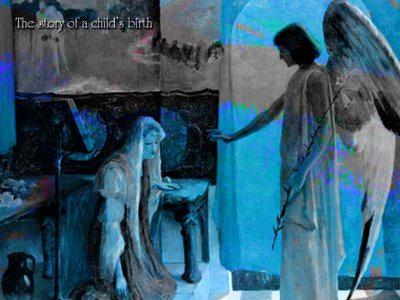
You remember the story of Christmas, right? Of the baby Jesus, born to a virgin in a barn in Israel. Of how god himself came to the earth in the form of an infant?

I love what bono says about all of this: “the idea that god, if there is a force of love and logic in the universe, would seek to explain itself is amazing enough…but the poetry of becoming a child born in straw and poverty is god - unknowable love, unknowable power - describing itself as being most vulnerable.”

Christmas is the time when we see god walking among us. When we see him dressed as a Santa Claus collecting change for the poor, or on tv asking for hurricane relief. Christmas is the time when we realize most that he loves us and is looking for every opportunity to be among us, to walk among us, and to demonstrate that love. Christmas is the time where god also invites us to participate with him in goodness and mercy, in creativity.

Our god is a god of creativity, after all and he wants us to create things. There is an ancient Jewish proverb that asks why, if god wanted us to eat bread, he didn’t give us a bread tree? And the answer is that he wanted us to make bread, to create it from wheat and flour, to participate with him in creation.

Christmas is a wonderful time for us to ask how we might participate with god in the redemption of our world in love to all mankind. Christmas is a time for us to imagine how our world might be different and how we might help make it better

Sequoia, old growth


Despite its sizeable population, 73% of Japan is uninhabited[1] due to the dangers posed by the volcanic Mt. Fuji and the torrent of the Pacific Ocean. As such, settlers have always looked for clues from nature as to where they ought to build. These are nature’s brail, communicating safety from itself.

Old trees are these clues.

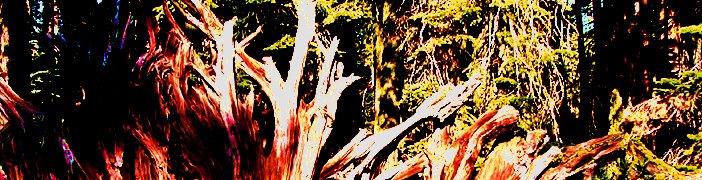
The evergreen trees of Japan (akin to the Douglas Fir of British Columbia and the sequoia of Northern California), thrive in areas naturally sheltered from the rage of nature. But there is something odd about these giant trees. Because some reach over 300 feet high and 21 feet wide,[2] you may expect them to need a certain “personal space”, but sequoia grow fairly close together and are marked by an organic peculiarity.

The trees share their roots.[3]

They are connected to one another through their root systems. It is this interconnectedness that allows the sequoia to survive the wind and the ocean and the storms and volcanoes. The trees glean strength from one another. They are tied to one another, demonstrating to us all that what matters most is not our individuality but our interconnectedness. These trees have lived long enough to remember before the Common Era, the time of Christ, the Shogunate, and through history past the Second World War because they are connected to each other.

We must foster such connections. Our spirituality has to reach out even beyond other people and become an extension of love for all of creation. We must arrive at a new connection with nature, a new “understanding of the human/extrahuman relation [else] we leave the future to the conflicting ideologies of the extreme.”[4] Theologian Douglas John Hall remarks we have lost the “capacity of the Christian gospel to befriend creation and all earth’s creatures including humankind”[5] and Belden C. Lane reminds us that spirituality encompasses a “sense of transcendence [and] love of the earth.”[6] This we must all reclaim in our grasp for a “renewed vision, a story worth telling, and silence in the presence of mystery.”[7]

The testimony of sequoia reminds us that there is a “sacred relation to the earth involving reciprocity between people and planet.”[8] In our hearts we know that “litter and pollution are spiritual issues”[9] and that openness to God is, “first of all, openness to the God of all places,”[10] because we know we’re all in this together. This is not only the realm of geopiety, of loving God through loving earth, but extends to the realm of Biomimicry.[11] We allow the land to teach us about ourselves, our families, our species, and survival in the midst of assault; for, we are certainly doomed if we cannot commune with each other and the planet that sustains us.

Matsura Emoto, author of the spellbinding Hidden Messages in Water, notes that “humans are the only creatures that have the capacity to resonate with all other creatures and objects found in nature”,[12] that our role as stewards is more than just a role of caretaker, but also a role of accountability. We are made in the image of God[13] to live as His emissaries[14] and carriers of His holiness,[15] and the earth is our home. The earth is the place where His holiness is revealed through people and, as such, is a special place because it is the place of that revelation. The earth is sacred. We contribute, in some measure, to the “maintenance of order in the universe by occupying the place allocated to [us]”[16] and allow our imagination to sanctify the place in which we live as a place of memory, hope, and imagination.

This connection to our home is a spiritual connection, painful if broken, but holy when intact. “Our lives are set between expulsion and anticipation,” says Walter Brueggemann “of being uprooted and rerooted…dislocated because of impertinence and relocated in trust”[17] mirroring the nemawashi[18] but also reflecting the pain of separation from our relationships and connectedness.

It is with this in mind that we look to the elder trees, to the sentinels of correlationship, as monoliths of connection. They model lives of wide-spreading lateral roots that connect us. We must be connected to everyone and all of creation if we are to survive, for there is a storm coming, and we must hold each other to face it.


[1] Cf. http://en.wikipedia.org/wiki/Japan
[2] Cf. http://en.wikipedia.org/wiki/Sequoia
[3] Ibid.
[4] Hall, Douglas John. Bound and Free: A Theologian’s Journey (Minneapolis: Augsburg Fortress, 2005), 99.
[5] Ibid, 85.
[6] Lane, Belden C. Landscapes of the Sacred: Georgraphy and Narrative in American Spirituality (Baltimore: John Hopkins University Press, 1988), 92.
[7] Ibid.
[8] Ibid, 6.
[9] Bell, Rob. Velvet Elvis: Repainting the Christian Faith (Grand Rapids: Zondervan, 2005), 158.
[10] Lane, Belden C. Landscapes of the Sacred: Georgraphy and Narrative in American Spirituality (Baltimore: John Hopkins University Press, 1988), 32.
[11] Biomimicry is a relatively new form of interdisciplinary research that maintains all important aspects of life can be learned from the examples supplied by creation. Cf. http://biomimicry.net/
[12] Emoto, Matsura. The Hidden Messages in Water (Hillsboro: Beyond Words, 2004), 51.
[13] Cf. Genesis 9.6, Acts 17.28
[14] Cf. 2 Corinthians 5.20
[15] Cf. Colossians 1.27, Colossians 3.9-10, Romans 3.21-22, 2 Corinthians 5.21
[16] Claude Levi-Strauss as quoted in Landscapes of the Sacred: Georgraphy and Narrative in American Spirituality (Baltimore: John Hopkins University Press, 1988), 14.
[17] Brueggemann, Walter. The Land: Place As Gift, Promise, and Challenge in Biblical Faith (Minneapolis: Augsburg Fortress, 2002) 15-16.
[18] Cf. “Nemawashi, preparing to move” in the previous section of this paper.

Nemawashi, preparing to move


Nemawashi is a Japanese horticultural term.[1] It describes the binding of the roots of a large tree in preparation for transplanting by excavating the soil and then cutting the roots. “The legendary Asian gardeners,” says Robert Dale in Seeds for the Future “know it may take years to transplant a tree in ways that spare the plant the chock of being uprooted”[2] and nemawashi is the carefully honed procedure that honors the life of trees. In this method, cut roots are bound with straw to ensure transportation without damage. Though time consuming, this preparation ensures that the next stage of growth can be completed in a new place.

Nemawashi is an important concept for the 21st Century church as we endeavor to transplant ourselves into a future that looks markedly different from our recent past. Transportation into the future requires an incredible shift, and whether that shift is best expressed as a movement from modernity to postmodernity, from propositional truth to storytelling, from personal piety to community devotion, or from rationalism to existentialism our world is shifting quickly to a new version of itself.

And it’s not going to stop.

“Immobility,” says Zygmund Bauman “is not a realistic option in a world of permanent change”[3] and we must learn how to manage that change, how to survive in order to avoid “massive adaptational breakdown.”[4] We are not just transporting mere ideas, but people. People are carriers of consciousness, ethics and aesthetic, and deserve to survive their uprooting. Sadly, it is other people who hurt their fellows during these shifts and cause long term damage to the human environment. The tension between modern Evangelicalism and the Emerging church might be expressed as the absence of nemawashi, for there has been little care on the part of the Emerging church to gently transport our forebears to a new worldview and far too much caustic critique.

Nevertheless, we are entering a new place in history - and it is a place in history. It is temporal space and we are left to wonder if this new space can be set apart, if this can be sacred space, and if so, how might we imbue this space with glory. Robert C. Belden talks about sacred space being contested, that every spiritual site in North America is a place of conflict.[5] Indian burial sites, or places like Medicine Wheel and Ground Zero are locales that remind us of conflict; and is not our time a place of conflict? Is not the time in which we live a place in history that is greatly contested? We are the nomads of kairos,[6] wandering through our shared history looking for a place to set up camp and once again live spiritually. This, perhaps, is the kind of postmodern placelessness that Thomas Merton referenced when he wondered how far he must “have to go to find you in whom I have already arrived?”[7]

We might look for a place of emergence, the axis mundi[8] or Jacob’s Ladder, where we can settle and experience a spirituality indigenous to our historical place. We might look for a place to put down roots, to reward our gentle nemawashi, and to complete our postmodern passage which has been marked by the signposts of “recreation, experimentation, and [now] existential relocation.”[9] Where once we were vagabonds, we now look to a new identity as tourists, as people who move voluntarily and not because we have been uprooted.[10] Ultimately, though, we will land in our place and redeem it for history, for we know that our nemawashi will safely re-place us in the transnational future of the global village. Our time of liminality[11] will end, and instead of existing on the margins of a structured world, we will center ourselves in the soul of a world alive.

Poetically, Margaret Wertherim posits that the internet may be such a place. She claims it is the place on earth most like heaven, the place for which we long to land. Others seem to agree. “The spiritual lure of the web is the promise of the return of our voice”[12] says The Cluetrain Manifesto, in accord with Wertherim’s notion and noting that “however much we long for the web is how much we hate our job.”[13] While probably not the place where we will put down roots, the internet does give us a box to be carried in during our transport, an integral part of our nemawashi, and it may foreshadow what our new home will look like when we get there.

Says Wertheim:
Just as early Christians envisaged heaven as an idealized realm beyond the chaos and decay of the material world - a disintegration all too palpable as the empire crumbled around them - so too, in this time of social and environmental disintegration, today's proselytizers of cyberspace proffer their domain as an ideal 'above' and 'beyond' the problems of the material world. While early Christians promulgated heaven as a realm in which the human soul would be freed from the frailties and failings of the flesh, so today's champions of cyberspace hail it as the place where the self will be freed from the limitations of physical embodiment.[14]

The internet is the discovery of a temporary home, a chez soi,[15] where we can let down our proverbial hair and speak as ourselves, with our own voice. It is the waypoint of our transfer and a distraction from our dislocation.

In a world where people have come to “feel a close affinity with their environment”,[16] where globalization is not “our desire but the inevitable future of our world”[17] and where there is a “strong sense of global unity”[18] we must take care to protect ourselves in transit from one Time to the next, from one Place to the next, and from Faith to the Future.


[1] The term is often used by Japanese businessmen as a metaphor for the “coordination and adjustment of opinion in a company or other organization.” Nemawashi…is the process of informal discussion that takes place at a company or other group before a resolution is introduced at a formal meeting. Its purpose is to ensure that the resolution will be passed smoothly, without any confrontations or heated disputes. Although the essential purpose of a public meeting is to allow the participants to exchange opinions and debate the issues freely, the Japanese have always preferred their decisions to be unanimous, and it is regarded as prudent to achieve a consensus of opinion before the meeting and thus avoid any differences or discord afterwards. Cf. http://d-training.aots.or.jp/GTJ/html/n.html
[2] Dale, Robert. Seeds for the Future, (Danvers: Lake Hickory Resources, 2005), 43.
[3] Bauman, Zygmund. Globalization (New York: Columbia University Press, 1998), 2.
[4] Toeffler, Alvin. Futureshock (New York: Bantam, 1970), 2.
[5] Lane, Belden C. Landscapes of the Sacred: Georgraphy and Narrative in American Spirituality (Baltimore: John Hopkins University Press, 1988), 67.
[6] Greek, “to what time brings, the state of the times, the things and events of time.” Strong's Number: 2540, Cf. http://www.biblestudytools.net/Lexicons/Greek/grk.cgi?number=2540&version=kjv
[7] Merton, Thomas. Dialogues with Silence (San Francisco: HarperSanFrancisco, 2001), 13.
[8] The axis mundi, or “world axis”, is considered to be the place where heaven and earth collide. It is also known among shamans and indigenous peoples as the “place of emergence.” Cf. http://en.wikipedia.org/wiki/Axis_mundi.
[9] Barna, George. Revolution (Wheaton: Tyndale, 2005), 83.
[10] This notion of tourists and vagabonds was first introduced by Zygmund Bauman in Globalization (New York: Columbia University Press, 1998), 78ff.
[11] Latin, lit. 'threshhold' [liminality], describes the experience of movement involved in having left one place, one conventional state of being, and not yet having arrived at another. Cf. Appendix A: Rejected Terms.
[12] Locke, Christopher and Rick Levine, Doc Searles, David Weinberger. The Cluetrain Manifesto: The End of Business as Usual, (New York: Perseus, 2001), 39.
[13] Ibid, 42.
[14] Wertheim, Margaret. “The Pearly Gates of Cyberspace” in Architecture of Fear (New York: Princeton Architectural Press, 1997), 296.
[15] French for "at home"; a space in which one seldom, if at all, finds oneself at a loss, feels lost for words or uncertain how to act. Cf. Appendix A: Rejected Terms.
[16] Tomlinson, Dave. The Post-Evangelical (Grand Rapids: EmergentYS, 1995), 136.
[17] Bauman, Zygmund. Globalization (New York: Columbia University Press, 1998), 83.
[18] Tomlinson, Dave. The Post-Evangelical (Grand Rapids: EmergentYS, 1995), 136.
Thursday, December 22, 2005

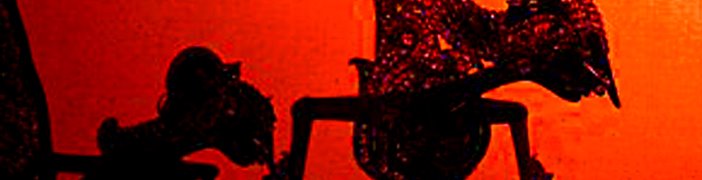
Nang Ta Lung: Shadow Play


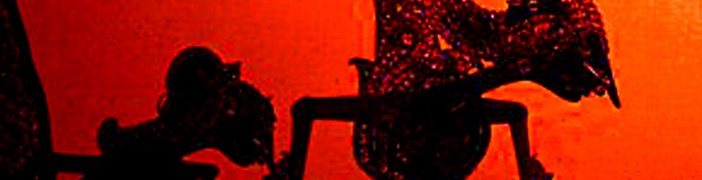
Nang Ta Lung is a traditional form of shadow puppetry used in Thailand. Nang Theatre, or Nang as it is commonly known among the people, is an “ancient form of storytelling and entertainment using opaque, often articulated figures in front of an illuminated backdrop to create the illusion of moving images.”[1] The most fascinating aspect of Nang, however, is not the shadow play itself but the audience’s freedom to sit wherever they choose during these performances, particularly behind the backdrop. From this vantage point, observers are free to study the movements of the puppeteers and see them switch characters, moving and manipulating the light and puppets, interacting all the while with the audience.

The Rocky Horror Picture Show[2] is one western example of this kind of audience interaction, and is typically shown at midnight in front of a singing, costumed audience as they interact with the props they’ve brought.[3] Similarly, the work of Robert LePage and Peter Gabriel to project the “behind the scenes” movements of Gabriel’s rock concerts allow the audience a glimpse into the production of such an event, a feat that LePage admits was inspired by Nang Theatre. Perhaps most Nang-like, however, is the emergence of such things as blogging, flash mobs, and now the maddening example of sites like Ineradicable Stain.[4] Ineradicable Stain, or IS for short, is a site designed by author Shelley Jackson used to promote her new book which IS being presently tattooed on the skin of 1780 participants, who are all now identified by Jackson as their “words.” In a year’s time, these “words” will gather together to stand in sentences and “be” Jackson’s book, though that book will never officially be published. No one outside of the words themselves will ever know what it says. This generates such a depth of community expression that Jackson promises to attend the funerals of all her words, and will replace them only upon their death, because their stories must be told.

This is how we do Nang Ta Lung in the West.

“The French and Italian,” says Robert LePage “come to see a show, the English to hear a show, and the Asian to be immersed in it.”[5] This fascination with being immersed in Story is not new (Nang Ta Lung dates back over a thousand years), but is newly western and a poignant example of voxpop globalization reframing the West. Nang is a kind of apophatic mysticism,[6] where God is known only in the shadow of all things, not in the things themselves. It is a perspective that wants to look at life, not just art, from “behind the scenes” and discover what the artist intends while s/he is creating. LePage goes on to mention that “Japanese Taoist consciousness is aware not only of the light side of theatre, but also the shadow side…in other words, they’re aware of theatre as a whole, and what goes on in the wings, in the control room, and at an organizational level is just as important as what takes place on stage.”[7]

As Christ followers we find ourselves drawn to the compelling story of redemption, a story with many characters played out over a hundred thousand chapters. This great story is comprised of many smaller ones, stories that charm us through tension and conflict, complexity and characters, stories that don’t always seem to resolve. Nang theology is a way of understanding faith “behind the scenes”, of seeing God at work in real time, without feeling the need to have everything resolved before each day is done. Nang allows us to watch the story unfold dramatically, not just grabbing the bullet points, and recalls us to the days of storytelling stones and stump meetings with village Elders reciting history.

Nang is a new way of telling a story for many of us, inviting us to see the larvae dei, the mask of God, which reveals His many aspects without revealing His fullness all at once. It allows all ordinary things to “assume new importance”[8] and offers us the ordinary world as a hiding place for moments of extraordinary holiness. This incarnation takes varied forms, for the mask God wears could be humanity or creation, vocation or pleasure. It is that which we see “through a glass darkly”[9] but shall see more clearly soon.

We have begun to see it in cyberspace. The online audience is becoming more a part of the performance, more connected to itself, every day. As such, there is actually less true performance online and much more community performance and participation. Advertisers are having a hard time responding to this shift, due to the audience understanding entertainment less as broadcast and more as environment, and advocates of a “smart audience” are growing increasingly bold in their disregard for advertiser’s perceptions. “We are not seats or eyeballs” says Doc Searles “or end users or consumers…we are human beings and our reach exceeds your grasp.”[10]

The Great Commission was never to bring everyone to church, but to bring the church to the people. We are to “be these unique kinds of people [transforming] the places [we] live and work and play because [we] understand the whole earth is filled with the kavod[11] of God.”[12] Nang theology gives us a choice about who we are and a choice about what to look at. It allows us to distinguish between faith that is missional and broadcast Christianity. Nang theology gives us the “livelihood, craft, connection, and community”[13] offered by the internet in practical spirituality. It reminds us that we are connected to one another in love, not as representatives of church or organization, but simply as who we are. It has less to do with our performance, and more to do with everything behind our screen, projected by our lights.


[1] http://en.wikipedia.org/wiki/Shadow_play
[2] Cf. http://imdb.com/title/tt0073629/
[3] For a complete audience particpation guide see http://www.badmovies.org/movies/rockyhorror/audience/.
[4] http://www.ineradicablestain.com/stain.html
[5] LePage, Robert. Connecting Flights (Quebec: Theatre Communications Group, 1999), 61.
[6] Apophasis is an allusion to something by denying that it will be mentioned, as in I will not bring up my opponent's questionable financial dealings. Cf. http://www.bartleby.com/61/7/A0370700.html There is a lengthy recorded tradition of apophatic mysticism, prompted by Moses’ encounter with YHWH on Sinai where Moses was unable to behold God Himself and was forced to look at His reflection on the stone. See also http://www.apophaticmysticism.com/TableofContents.html
[7] LePage, Robert. Connecting Flights (Quebec: Theatre Communications Group, 1999), 61.
[8] Lane, Belden C. Landscapes of the Sacred: Georgraphy and Narrative in American Spirituality (Baltimore: John Hopkins University Press, 1988), 67.
[9] Cf. 1 Corinthians 13.11
[10] Locke, Christopher and Rick Levine, Doc Searles, David Weinberger. The Cluetrain Manifesto: The End of Business as Usual, (New York: Perseus, 2001), xv.
[11] Hebrew, lit. “glory.” Cf. Strong's Number: 03519. http://www.biblestudytools.net/Lexicons/Hebrew/heb.cgi?number=03519&version=kjv
[12] Bell, Rob. Velvet Elvis: Repainting the Christian Faith (Grand Rapids: Zondervan, 2005), 85.
[13] Locke, Christopher and Rick Levine, Doc Searles, David Weinberger. The Cluetrain Manifesto: The End of Business as Usual, (New York: Perseus, 2001), 22.

Tuesday, December 20, 2005

The Lamed Vov, Just Men


I was first introduced to the idea of Lamed Vov by Len Sweet. Since then, I have traced this fabulous myth through texts and pop culture, online wiki sources and photographic essays and come to find that herein lies a powerful truth for all followers of Jesus Christ.

The Lamed Vov are thirty-six Just Men who though their deep love and devotion help the world go forward. No one knows who they are. They don’t even know who they are. …this is similar to those Jesus described who lived lives of such service to others that at the Last Judgment they have no memory of having ‘clothed or fed the least of these.’”[1]

The Lamed Vov represent what is noblest in humanity. Theirs is a spirituality of engagement that brings the presence of righteousness into a world of diminishing rectitude. They set an example for us to “partner with God in the redemption of the world”[2] and demonstrate the freedom to “claim the good, the true, [and] the holy wherever and whenever [they] find it.”[3] This is crucial for us if we are ever to go beyond sin management into a faith that has meaning for our lives, a faith that can make us care.

This kind of spirituality requires that churches and Christ followers abandon a doctrine of behavior modification. Instead we ought to embrace holiness that “is not primarily defined by what we don’t do, but rather by what we do in our hallowing of the everyday.”[4] This translates to a fundamental shift Left, especially for Evangelicals. We need to embrace Justice and world help; creating Heaven on earth, not just making attempts to escape earth and claw our way past St. Peter. This is a step away from concerns about piety and towards concerns about activism. It is the kind of attitude Tony Campolo notes when he remarks that no one ever called Jesus “pious” because he was “was too busy expressing compassion to measure up to the expectations of piety.”[5]

The Lamed Vov are people remembering how to care. They are a vaccine of care. The absence of care is pestilence, and it infects everything from our hearts and our clergy to the world and the marketplace. “We don’t believe what we’re saying anymore” says Doc Searles about this heartlessness “[and] we know that no one else believes it either, but we keep saying it because because because [sic.] the needle’s stuck…who would we be if not the people who say these things?”[6] Searles’ powerful text on the voice of online interactivity, The Cluetrain Manifesto, sparked an uprising of the hyperlinked business community in response to this societal blasé. This text would also serve the church well; for we must disavow ourselves of the notion that our beliefs and intellectual assent are sufficient. Meaning is the commodity of choice in a spiritual world, not intellect. We must understand that our deeds are not only sacramental, but “they are themselves relevatory [and reveal] God in His goodness.”[7] Where once we flouted our spiritual freedom, we must now also brag of our engagement in the world; for “there is no freedom of God without the politics of justice and compassion, and there is no politic of justice and compassion without a religion of the freedom of God.”[8]

When I think of the Lamed Vov, I cannot help but wonder who they would be if they really existed. Yet in spite of our immediate reflex to consider great and noteworthy people as possible members of this ongoing legend - people like Mother Theresa or Bono, John Paul II, Desmond Tutu and Thomas Merton - we may do well to consider that God has often looked to the simple to find His reflection. It is the humble offering of the widow who gave her two mites that reflect Him most, and it may very well be men like Dave Midkiff - who daily pulls recyclable material out of my trash and teaches school children about ecology - in whom God has found resonance. It may be people like Maria – whom I met while in Juarez, who gave all she had to an orphanage and died in the city dump - who truly embody the truth of the Lamed Vov.

Regardless, we can be certain that this mythology expresses a far different manifestation of Christianity than the high-gloss book store themes so prevalent among WWJD wearing teens, or the pop theology offered in “how to” texts in church lobbies. Instead, The Lamed Vov are more likely to be with Jesus in a gay bar in San Francisco, “working with people who have aids…the new lepers.”[9]

Jesus will always be with the lepers, and so should we.


[1] Sweet, Len. Out of the Question…Into the Mystery, (Grand Rapids: Zondervan, 2004), 182-183.
[2] Frost, Alan and Michael Hirsch. The Shaping of Things to Come: Innovation and Mission for the 21st Century Church, (Auckland: Hendrickson Publishers, 2003), 115.
[3] Bell, Rob. Velvet Elvis: Repainting the Christian Faith, (Grand Rapids: Zondervan, 2005), 80.
[4] Frost, Alan and Michael Hirsch. The Shaping of Things to Come: Innovation and Mission for the 21st Century Church, (Auckland: Hendrickson Publishers, 2003), 132.
[5] As quoted in 21CC, November 1990, p,27.
[6] Locke, Christopher and Rick Levine, Doc Searles, David Weinberger. The Cluetrain Manifesto: The End of Business as Usual, (New York: Perseus, 2001), 179.
[7] Frost, Alan and Michael Hirsch. The Shaping of Things to Come: Innovation and Mission for the 21st Century Church, (Auckland: Hendrickson Publishers, 2003), 137.
[8] Brueggemann, Walter. The Prophetic Imagination, (Minneapolis: Augsburg Fortress Press, 2001), 9.
[9] Frost, Alan and Michael Hirsch. The Shaping of Things to Come: Innovation and Mission for the 21st Century Church, (Auckland: Hendrickson Publishers, 2003), 25.

iMagi


Astrolonomy is the science and study of space. Astronomy is the magical practice of reading the position of stars in space. For as long as mankind has been on earth, we have been fascinated with what lives up in the stars. As a young boy I can remember looking up into space and wondering what it would be like to battle darth vader, or fly the enterprise or shake off cylons.

But these fantasies derailed a bit on january 28, 1986 when the challenger shuttle exploded shortly after take off from the kennedy space center. The explosion of the challenger made me realize that, with all the knowledge we have, we really don’t know very much at all.

But we know so much

We are students of the stars, like the “three wise men.”

The magi, as they are commonly known in the bible, are the three wise men whom we see gathered around the manger of the baby Jesus in the stable in christmas tradition. They followed a star.

matthew 2.1,2 and 7-12

1After Jesus was born in Bethlehem in Judea, during the time of King Herod, Magi[a] from the east came to Jerusalem 2and asked, "Where is the one who has been born king of the Jews? We saw his star in the east[b] and have come to worship him."

7Herod then arranged a secret meeting with the scholars from the East. Pretending to be as devout as they were, he got them to tell him exactly when the birth-announcement star appeared. 8Then he told them the prophecy about Bethlehem, and said, "Go find this child. Leave no stone unturned. As soon as you find him, send word and I'll join you at once in your worship."

9Instructed by the king, they set off. Then the star appeared again, the same star they had seen in the eastern skies. It led them on until it hovered over the place of the child. 10They could hardly contain themselves: They were in the right place! They had arrived at the right time!

11They entered the house and saw the child in the arms of Mary, his mother. Overcome, they kneeled and worshiped him. Then they opened their luggage and presented gifts: gold, frankincense, myrrh.

12In a dream, they were warned not to report back to Herod. So they worked out another route, left the territory without being seen, and returned to their own country.


Now, before we get back to the magi, let me make a few observations about the gospel of Matthew. The gospel of Mattew was written to a primarily Jewish audience. As such, Matthew writes with the intent of showing Jesus as the Messiah, the savior and king of the Jews. So his gospel, unlike the other 3, follows the story of Joseph not of Mary.

Joseph, a descendant of King David – the royal family of Israel, like the Kennedys to the USA – is noticealy silent in his own tale, but is visited three times by angels who herald the supernatural coming of the Messiah. When these three wise men enter the story – the story of the king of the Jews, the Jewish messiah – they enter through supernatural means consistent with the revelation and terror of angels – they follow a star.

They are astrologers.

They are magi, wizards and sorcerers, diviners and readers of the stars. They are foreign priests and soothsayers of the religious caste in Persia. The book of Daniel talks about Daniel as a rab mag, or “chief magus” which is the same connotation used for these men. Daniel was “skilled in interpreting dreams” and was entrusted with a messianic vision – he saw one coming like the son of man – whose birth would be heralded by a star.

Stars were seen as portents, as signs, of royal births. These wise men knew they were coming to see a king, and though they didn’t arrive in time for his birth – sorry, nativity set creators – they arrived when he was just a young boy, maybe two years old, to pay hommage.

The magi were led by the stars, and by their dreams

They were warned in a dream not to return back to Herod.

Now there’s a lot going on here. Court sorcerers and royal priests from Persia came to see the birth of a king in Bethlehem. But en route, they encountered the “King of Jerusalem” Herod, who was a Roman puppet that made a living out of oppressing his own people. This “King of Jerusalem” heard about the birth of a new king, and recognized immediately that this new king could bring in a new kingdom, a kingdom that would threaten his power and structure.

These royal, Persian, priests – undecieved by Herod – went on their way to find Christ, the annointed one, the newborn king, and when they found him they worshipped him and gave him gifts befitting a king. This was the gold, frankincense, and myrrh.

In case you’re wondering, frankincense and myrrh were always gifts for kings – they were aromatic spices, made from dried tree sap, often used as incence, that were given at coronations, births, and funerals [Nero once burned myrrh in commemoration of his late wife for one year]. We must ask ourselves what it means that these foreign priests came to honor the baby Jesus, and not Herod, the King of Jerusalem. We must ask ourselves what it means for a baby to be honored above a king. We must ask what it means for a foreigner to worship the new king of the Jews, instead of his own people.

Why shepherds and foreigners and angels? Why not priests and families, and business owners? What does it mean when our expectations are pulled down? Why is the world and kingdom to which we belong not the world and kingdom that God seems to be honoring?

And isn’t it interesting that God chose to warn the magi in their dreams? These were men who communicated in dreams, who made their living from dreams, and God chose that medium to communicate with them. And not just with them, with Joseph and Mary and a host of other characters.

God is the god of our dreams, and we must ask ourselves if we are being led by our dreams, and if He is the lord of our dreams, and if our dreams are steering us correctly towards Him and what He values.

The psalmist wrote, May He grant you according to your heart's desire, and fulfill all your purpose (Psalm 20:4). We also know that psalm 37.4 says that if we delight ourselves in the Lord He shall give us the desire of our hearts. Now, when I was young I always thought that meant God would give me whatever I wanted; but at this point in my life, I’m rather tempted to think it means that He will govern my desires, that He will places desires in my heart and teach me to want good things, that my mind will be set on things above.

Because I know that I am led by my desires. I do everything I do because I want to. Even if I do something I don’t want to do – something selfless – I do it because I want to be good, or obedient, or selfless.

We do what we do because we’re led by our desires, and because we’re led by our dreams.

At Westwinds we’re led by our dream to cultivate a community centered around Jesus Christ, expressing a faith that is both ancient and a faith representative of the future at the same time. We’re led by a dream that we can be a church that matters to our community – that we can innovate ourselves into oblivion, trying every exciting and wonderful new thing so we can live in love, so we can live in Christ, so we can experience the presence of God and the power of community in our midst. We’re led by a dream that church doesn’t have to keep people away from experiencing God, but can lead people into his heart, so that we can know Him. And so that we can love Him and feel Him and sense that He is with us.

We’re led by a dream of becoming new prophets and messengers, we’re led by a dream of revolution – of throwing away a mindset based on consumption and embracing a life of passion and fulfillment in Jesus Christ.

But people always wonder about us.

Not just our church, people wonder about us as Christians.

Because we’re flawed, we’re messed up. We’re crooked sticks, not straight, not perfect, and people wonder if God can use a crooked stick to draw a straight line. The magi were crooked sticks, foreigners, pagans, sorcerers, but God used them to point to the Christ.

Westwinds is a crooked stick, but God is using us to lead people to him. I am a crooked stick, and you, and my family, and yours, but God can use us to foster community to facilitate love, and to embrace the world. God can use you to draw a straight line, no matter how crooked you are, if you will let him.

The trick about drawing straight lines has little to do with what stick you’ve got, and a whole lot to do with who’s holding on to it.

Will we let Him guide us? Will we be used to draw lines running back to Him? Will our lives point to God, or to something else? Will our dreams point to God, or to something else?

Do we even care?

Sunday, December 18, 2005

Bricolage, put it together


A bricoleur is a person who creates things from scratch. They take raw materials like broken pots or garbage and old bikes, and make art. A bricoleur is also a person who collects information, from equally varied and wide flung sources, and pieces them together in creative and resourceful ways to articulate something new. In information technology, bricolage is an open source content management system[1] similar to Linux. In biology, it is a term used in reference to the evolutionary history of an organism.[2] Culturally, Claude Levi-Strauss used the term to understand the American poor living in ghettos. Bricolage was a term for their strange dress, rituals, bizarre attitudes, and public art they used as rhetorical challenges to the law.[3] Similar examples exist outside of the USA, Lypton Village, for example, was made recently famous through the memoirs of U2’s Bono.[4]

Christ followers in the 21st century must become bricoleurs, engaging in cultural exegesis and pop theology with verve equal to the intellectual requirements of a world that grows smarter every day. We must understand “life as ministry, work as mission, and play as worship”,[5] and see that what is true in art is also true in spirituality, that “genius has to do with convergence.”[6] The Church must once again become the meeting place for architecture, theatre, literature, and conversation. She must reclaim her true self from the sanitized and sterile model she has become in her modern manifestation. She must overcome her fear of cross-pollination, of being polluted. Towards this end we shall acquire objects and symbols from “across social divisions to create new cultural identities”[7] and create a new punk[8] to rediscover creation with God.

For many, this has already begun. Dave Tomlinson notes that post-evangelicals (his term for Christ followers in the postmodern era) “are more at ease with a box of components that can be constructed into several different pieces of furniture”[9] than with a strict plan and set of materials. As bricoleurs, we must employ this ease to escape the silliness of Christian subculture and folk art. We must again explore beauty as an attribute of God.

Our theology of beauty is frequently represented in our church services, for better or for worse. “Everything in the service needs to preach” says Pastor Mark Driscoll “[from the] architecture, lighting, songs, prayers, fellowship, the smell, it all preaches…to experience God is often the highest form of knowing.”[10] This thinking recalls the biblical examples of the musician King David and Bezalel, the son of Uri, who was filled with the spirit of God and had skill, knowledge and ability in all kinds of crafts.[11] It is the thought of beauty and an offering. It is a thought of love given.

We were created to be creators. If this were not so, then why didn’t God create everything for us? If we are to live on bread, why did He not create a bread tree? God takes pleasure in our imitation of Him and of His creative ability. He would rather we partner with Him than simply mope after Him, for we are made in His image and likeness.[12] He is a craftsman,[13] a singer,[14] a weaver,[15] and an architect[16] – how could He expect any less from us when we are motivated to follow Him?

The time is ripe for bricolage. We must recover a spirituality of creativity, resourcefulness and clever frugality. We must embrace the path of the bricoleur and find meaning in the “mysteries, ambiguities, and paradoxes of faith.”[17] We must put it all together so a broken world can know what it looks like.


[1] Cf. http://www.bricolage.cc/
[2] Cf. http://en.wikipedia.org/wiki/Bricolage
[3] Ibid.
[4] Cf. Assayas, Michka. Bono: In Conversation with Michka Assayas (London: Riverhead, 2005).
[5] Frost, Alan and Michael Hirsch. The Shaping of Things to Come: Innovation and Mission for the 21st Century Church, (Auckland: Hendrickson Publishers, 2003), 127.
[6] LePage, Robert. Connecting Flights (Quebec: Theatre Communications Group, 1999), 67.
[7] Cf. http://en.wikipedia.org/wiki/Bricolage
[8] Bricolage is used to mean the processes by which people acquire objects from across social divisions to create new cultural identities. In particular, it is a feature of subcultures such as, for example, the punk movement. Here, objects that possess one meaning (or no meaning) in the dominant culture are acquired and given a new, often subversive meaning. For example, the safety pin became a form of decoration in punk culture. Cf. http://en.wikipedia.org/wiki/Bricolage
[9] Tomlinson, Dave. The Post-Evangelical (Grand Rapids: EmergentYS, 1995), 87.
[10] as quoted in “Out of the Box: Authentic Worship in a Postmodern Culture”, Worship Leader (May/June, 1998), 25.
[11] Cf. Exodus 35.30-32.
[12] Cf. Genesis 9.6, Acts 17.28
[13] Cf. Psalm 102
[14] Cf. Zephaniah 3.17
[15] Cf. Psalm 139.15
[16] Cf. Psalm 102.25
[17] Tomlinson, Dave. The Post-Evangelical (Grand Rapids: EmergentYS, 1995), 30.